


Green waste and rubbish guide
Skip bin or rubbish removal: which suits a garden clean-up?
By the Action Garden team · Updated · 11 min read
Checked against: Whitehorse City Council, City of Boroondara, EPA Victoria, Victorian Government
TL;DR
- A skip is a container you hire and fill yourself; a removal service sends a crew that loads, takes the pile away and tidies up.
- Skips suit multi-day DIY clean-ups with space on the property; on a road or nature strip, the skip company usually needs a council permit.
- Removal suits finished piles, narrow or steep access, no room for a bin, heavy lifting and one-day deadlines.
- Neither takes asbestos or chemicals in a normal load, and many skip companies restrict soil, green waste, tyres and mattresses.
- Springy prunings fill a skip fast, so cut, stack and stamp them down, or the volume you hire will not be enough.
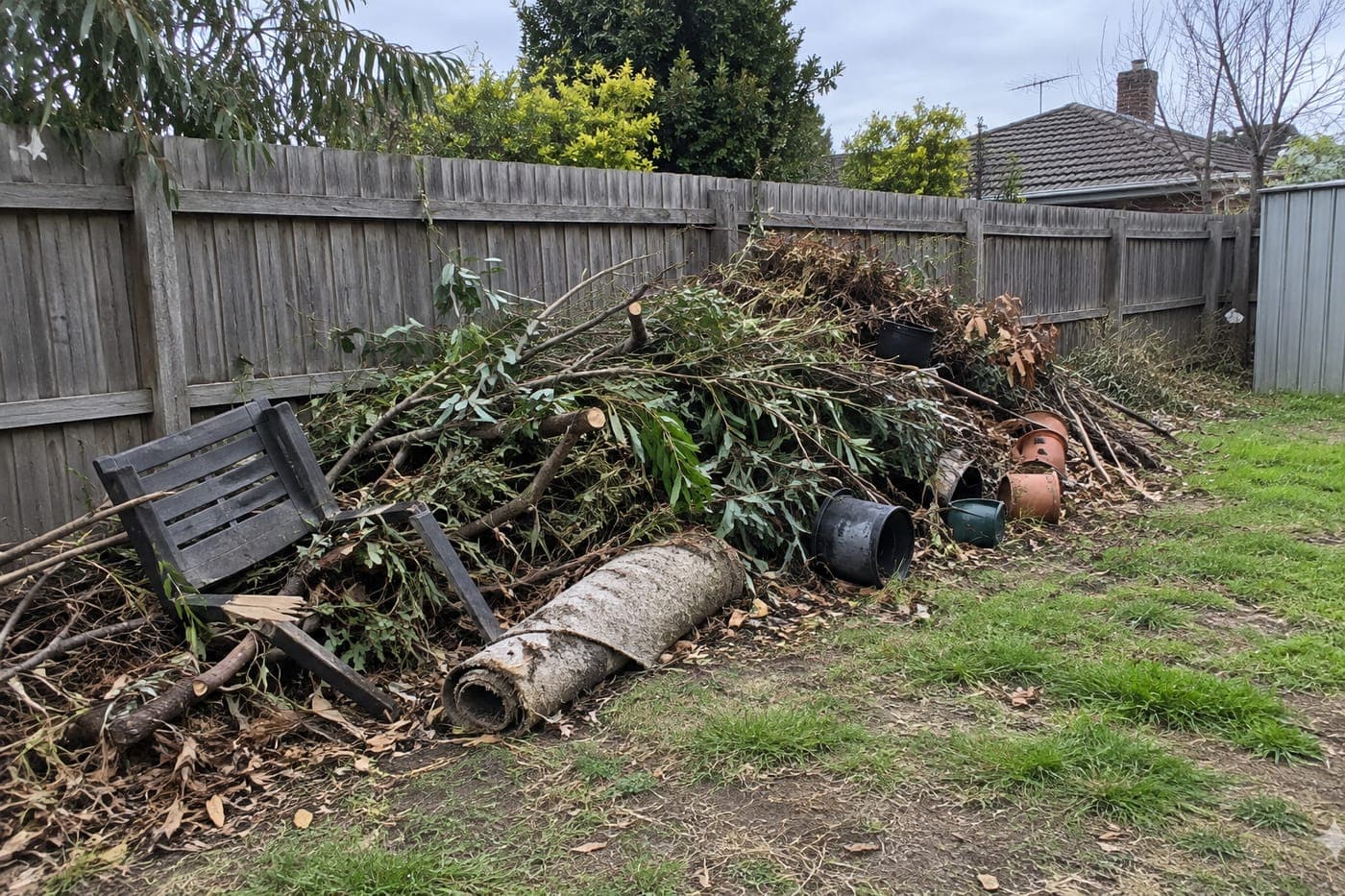
What is the real difference between a skip bin and a rubbish removal service?
A skip bin is a container that is dropped off, filled by you, and collected later. A rubbish removal service sends a crew and a vehicle, loads the pile for you, takes it away the same visit and tidies up after. The skip moves the waste; the removal service moves the waste and does the work.
That difference decides most garden clean-ups. With a skip, the hiring is the easy part and the loading is yours: cutting, carrying and packing it in over a day or a weekend. With a removal service, the work you do is getting the pile ready, or nothing at all if the crew is also clearing the garden.
There is a time difference too. A skip involves a drop-off, your loading time, and a pick-up, which can span several days. A removal is a single visit. Our complete guide to garden rubbish removal in Melbourne sets both alongside the council and bin routes; this guide focuses on the choice between the two.
How do a skip and a removal service compare for a garden clean-up?
A skip wins when you have time, helpers and space, and the job produces waste gradually over a weekend. A removal service wins when the pile already exists, access is awkward, there is nowhere to put a bin, or the job must be finished in a day. The table sets them side by side.
Side by side
Skip bin and rubbish removal side by side
| Question | Skip bin | Rubbish removal service |
|---|---|---|
| Who loads it | You | The crew |
| How long it is on site | Usually several days | One visit |
| Space needed | A flat, firm spot for the bin and access for the truck | Somewhere to park near the pile |
| Council permit | Usually needed on a road or council land, applied for by the skip company | Not needed for a normal visit |
| Best for | Waste produced over a weekend of DIY work | A pile that is already cut and stacked, or a full clear-out |
| Restricted items | Set by the skip company, often soil, tyres, mattresses and hazardous waste | Set by the operator; hazardous items need their own route |
| Clean-up afterwards | Yours, including anything spilled around the bin | A sweep and tidy, if it is part of the job |
| Fitting the volume | You choose a size in advance and live with it | Quoted on the actual pile |
Neither option is right for asbestos, chemicals or batteries. Those go to a licensed asbestos removalist, a Detox Your Home collection or an e-waste drop-off; our guide to asbestos and chemicals in the garden covers who to call.
Two timelines side by side. The skip timeline shows a bin dropped on the driveway on day one, a figure loading it across two or three days, and a truck lifting it away on the last day, with a small permit icon if the bin sits on the road. The removal timeline shows a single morning: a crew arrives, loads a trailer from the back of the garden, sweeps up, and leaves. A shared baseline under both reads "same pile, different work", in brand colours.
Where can a skip go, and do you need a council permit?
A skip inside your property boundary, on your driveway or front yard, usually needs no permit. A skip on the road, footpath, nature strip or other council land usually does, and in many Melbourne councils only the skip company can apply. The rules differ by council, so ask the hire company to confirm before delivery.
Two councils show the kind of rules involved, as their pages read in November 2026:
| Council | Who applies | Key placement rules |
|---|---|---|
| Whitehorse (opens in a new tab) | Skip bin contractors only, not residents, at least 48 business hours before placement | Road only if private land is not possible; not on the nature strip or grass reserve; 1.8 m clear of the property line; lighting or reflective tape on roads |
| Boroondara (opens in a new tab) | "Only registered skip bin companies may apply for a skip bin permit" | Not on arterial roads; retro-reflective tape; lights if not visible in the dark; maximum 7.5 m long, 2.5 m wide and 1.5 m high |
Both councils say no permit is needed for a skip on private property. Boroondara's page puts it simply: "You don't need one if the bin is on private property."
What cannot go in a skip on a garden clean-up?
Asbestos, chemicals, paint, gas bottles and batteries are not accepted in a normal skip, and many companies also restrict soil, concrete, tyres, mattresses or green waste, or want them in a separate bin. The list is set by each company, so ask before you book and before you start loading.
Garden clean-ups throw up the restricted items more often than people expect:
- soil and turf: very heavy for their size, often refused or binned separately;
- rubble, pavers and concrete edging: heavy, sometimes accepted only in a dedicated bin;
- green waste: some companies offer green-only skips, while others take it mixed;
- old fibro sheds, fences or edging: may contain asbestos and must never go in a skip;
- garden chemicals, pool chemicals and fuel: hazardous, with their own official drop-off;
- cordless tools and garden lights: e-waste, which cannot go in a household or kerbside bin in Victoria.
EPA Victoria (opens in a new tab) says asbestos waste must go to a landfill authorised to receive it. Breaking up old sheeting to fit it in a skip is exactly what releases fibres.
Choosing a skip company that disposes of waste properly
EPA Victoria's advice to householders hiring a skip is to "Choose a respectable company, ask to see the receipts that show they take waste to a licensed landfill or recycling facility" and to beware of offers so low that the waste might be "dumped illegally in the bush, a park or a creek."
The same EPA guidance says you break the law if you dump, abandon or bury waste at a place not authorised to accept it, including private land. A company that answers clearly about restricted items and where loads go is usually a company that disposes of them properly.
How much garden waste fits in a skip?
Less than you might think. Freshly cut prunings, palm fronds and hedge cuttings are springy and full of air, so they fill a skip long before it is heavy. Cutting material short, stacking it flat and stamping it down makes a big difference to how much fits.
Measure the pile before you choose a size. Picture the smallest box the pile would fit inside, multiply length by width by height in metres, and you have its volume in cubic metres. A pile 2 m long, 1.5 m wide and 1 m high is 3 cubic metres.
Then allow for the material:
- Loose prunings and hedge cuttings compress a lot, so measure after stacking and stamping them, not as they fall.
- Branches pack badly unless cut into short, straight lengths and laid in one direction.
- Soil, turf and rubble are dense, so a small heap can reach a skip's weight limit long before it reaches the rim.
- Mixed loads pack best with heavy, flat items at the bottom and green waste on top.
Most skip companies ask that nothing sits above the rim. If the waste is still growing as you work, it is hard to know the final size in advance, and that is one of the real advantages of a removal quoted on the finished pile.
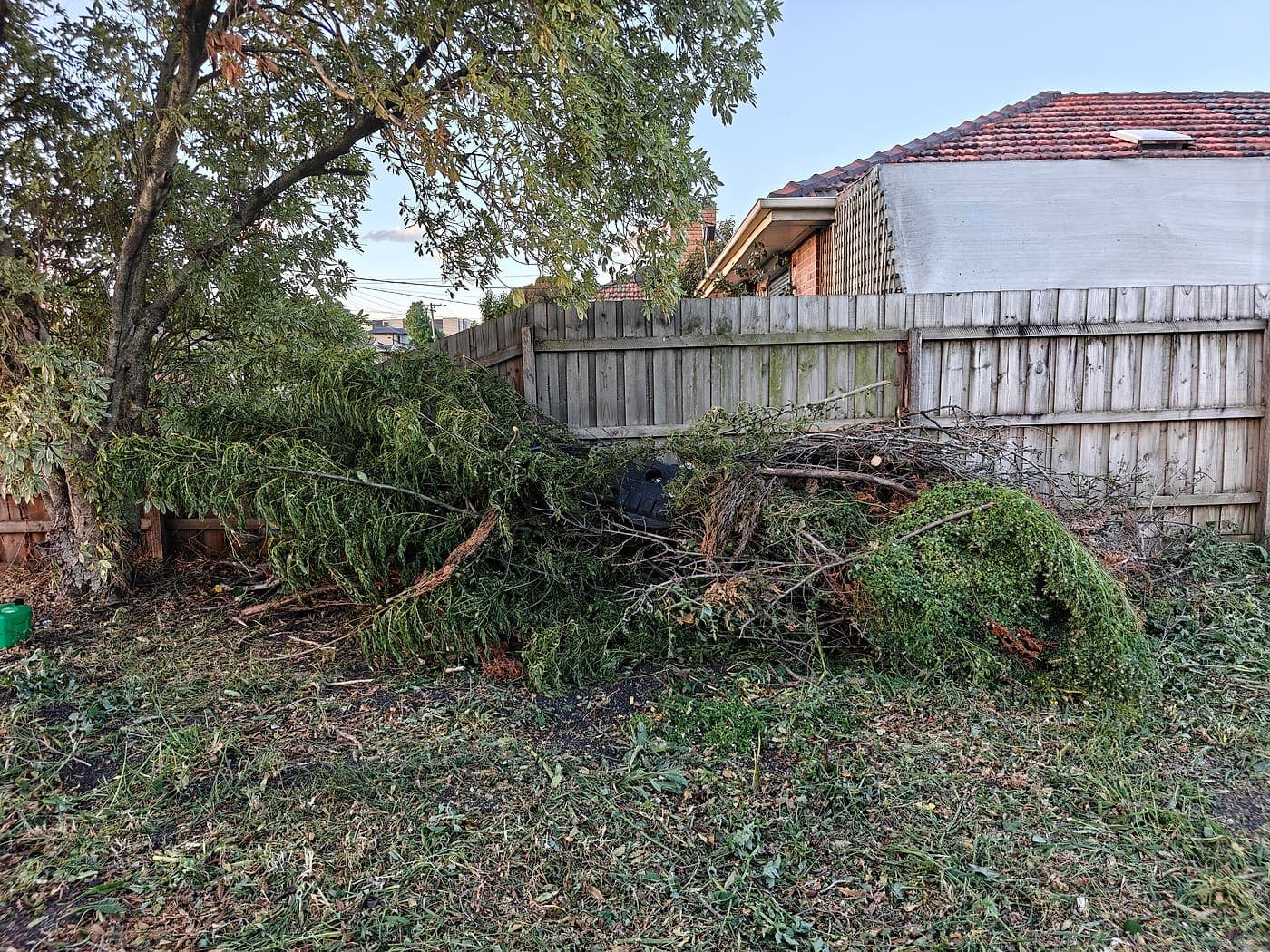
When does a skip suit a garden clean-up best?
A skip suits a clean-up you are doing yourself over a day or more, when you have a safe, flat spot on the property for the bin, helpers to load it, and waste that fits the company's accepted list. A weekend garden overhaul with friends is the classic case.
It also suits jobs where waste comes out steadily rather than all at once. Pulling out an old hedge, stripping a bed, lifting tired pavers and cutting back a creeper can each run over several days, and having the bin on site means you load as you go.
The skip suits you less when the spot for it is the street, the garden is up a flight of steps or down a narrow side path, or the people loading it are not up to heavy lifting. Then the hire is still easy, but the job is not.
Loading a skip safely
Lift with your legs, not your back, and carry long branches with a second person. Wear gloves, eye protection and sturdy shoes, because skip edges are sharp and prunings whip back. Never climb into a skip to stamp down a load, and never stand on the rim.
Load heavy, flat material at the bottom and spread it evenly, so the bin can be lifted safely. Keep a clear path from the garden to the bin and pick up anything that drops on the footpath as you go.
When is a rubbish removal service the better choice?
A removal service is the better choice when the pile is already cut and stacked, the access is tight or steep, there is no safe spot for a bin, the people at the property cannot do heavy lifting, or the job has to be finished in one visit. It is also simpler when part of the pile is green waste and part is junk.
These situations come up again and again:
- After a big garden job: a hedge cut-back, an overgrown garden rescue or a full tidy-up already produces a finished pile.
- After a storm: fallen limbs and scattered branches need clearing quickly; our order of jobs for a garden clean-up after a storm covers what to do first.
- At the end of a renovation: the yard is full of offcuts, packaging and builders' mess as well as damaged plants; our post-renovation yard clean-up checklist walks through the order.
- With a deadline: end of lease, settlement or a sale campaign.
- With difficult access: a pile at the back of a long block, behind steps or along a narrow side path.
For a smaller, steady flow of soft garden waste, neither option may be needed: the green bin, a branch booking or home compost can do the job. Our guide to what goes in the FOGO and green bin shows what the bin will take, and our post on where green waste goes after it leaves the garden explains why it matters.
Quick decision guide
Skip or removal for your clean-up?
- Is anything in the pile possibly asbestos, chemicals or batteries? Set it aside for its own official route before you choose.
- Is the pile already cut and stacked? Book a removal for a one-visit job.
- Is there a flat, safe spot on your property for a bin that a truck can reach? If not, a removal avoids the permit process and the street.
- Do you have the time and the people to load it over several days? If yes, a skip can suit. If no, book a removal.
- Is most of the waste soil, rubble or something the skip company restricts? Ask before you hire, or choose a removal quoted on the actual pile.
Get professional help for branches still hung up in trees or under tension after a storm, anything near power lines, and heavy lifts that need more than one person. If you uncover fibro, old cement pipes, broken roofing or suspect fill, stop, keep people and pets away, and contact a licensed asbestos removalist: never break it up to fit a skip.
What affects a removal quote, and when is it worth handing over?
A removal quote depends on the volume, which we estimate in trailer loads, the type of waste, the access and carry distance, and how much sorting is needed for recycling. A photo of the whole pile with a wheelie bin beside it for scale is usually enough to quote it.
Our rubbish removal service takes garden waste, furniture, appliances, renovation debris and general clutter, loaded by our team, with a sweep and tidy afterwards. Same-day removal is often possible, and it can be added to a garden job so the clean-up and the removal happen in one visit. Green waste goes to the local council tip or transfer station, where it is disposed of properly and repurposed; it is never dumped. More routes for each kind of waste are in our green waste and rubbish guides. Soil, rubble and concrete count as hard rubbish, so they are discussed with you first and quoted as an extra.
If the skip would end up on the street, or the people who would load it have better things to do with their weekend, that is a good time to hand it over. You can get a free quote with just your name, your mobile and a photo of the pile.
Your Garden. Our Promise.
From our jobs
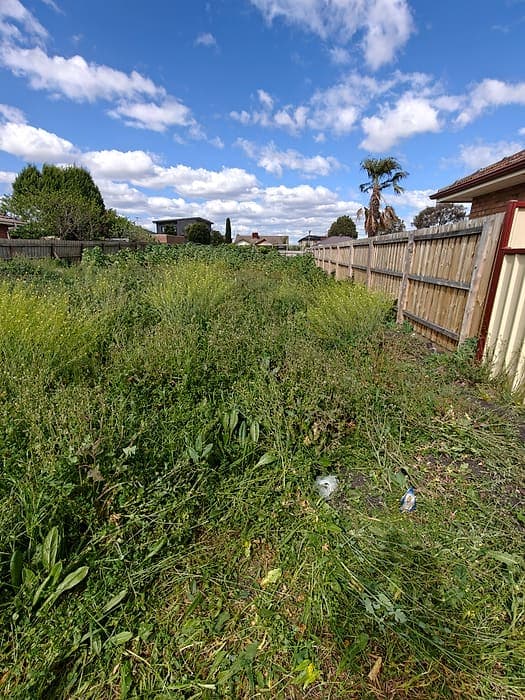
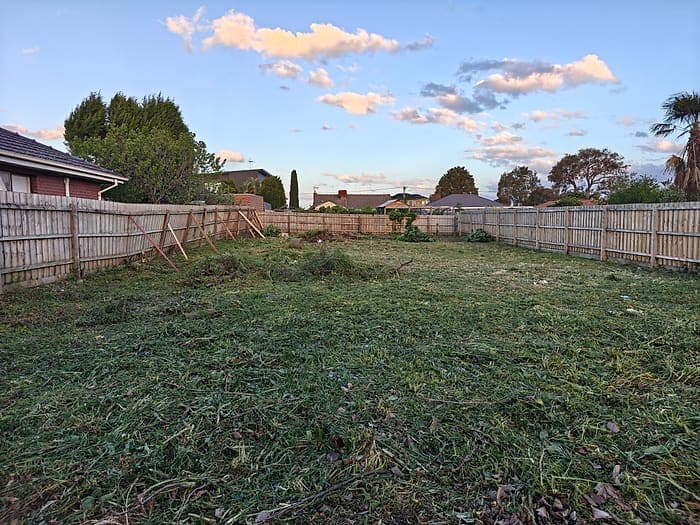
Frequently asked
Can a skip bin sit on my nature strip?
Who is responsible if a skip damages the driveway or footpath?
Can I mix green waste and general rubbish in the same skip?
How full can a skip be filled?
Is a skip or a removal service quicker for a one-day garden job?
What should I do with garden waste that will not fit in the skip?
Sources and further reading
- Skip bins and shipping containers (Whitehorse City Council)
- Skip bins, road and footpath permits (City of Boroondara)
- EPA's winter clean up tips (EPA Victoria)
- Dumped waste (EPA Victoria)
- Manage asbestos waste (EPA Victoria)
- Recycling food and garden organics in Victoria (Victorian Government)
Caring for Melbourne gardens since 2019. Updated 18 November 2026.