


Gardening
A one-day garden bed refresh: what we do and why
By the Action Garden team · Updated · 12 min read
Checked against: Sustainable Gardening Australia, Agriculture Victoria, Water Victoria
TL;DR
- The order matters: clearing and weeding come before pruning, and mulch always goes on last, over moist, weed-free soil.
- Weeds are taken out with their roots, bulbs and runners where possible, because a bed that is only cut back at the surface is green again within weeks.
- Shrubs and perennials are pruned for their type and season, not simply sheared, so they flower and fill in again.
- A crisp edge between lawn and bed and a coarse mulch 50 to 75 mm deep do most of the work of keeping the bed tidy afterwards.
- The day ends with green waste removed, paths swept and a photo, plus simple notes on watering and what to watch in the weeks after.
What is a one-day garden bed refresh?
A one-day garden bed refresh takes a tired, weedy or overgrown bed and resets it in a single visit: cleared, weeded, pruned, edged, fed, planted where needed, mulched and cleaned up. It sits between a regular maintenance visit and a full garden rescue.
It suits beds that have slipped for a season or two rather than years. Typical reasons people book one are a garden going on the market, a new rental tenancy, guests coming for the holidays, or simply wanting the weekends back.
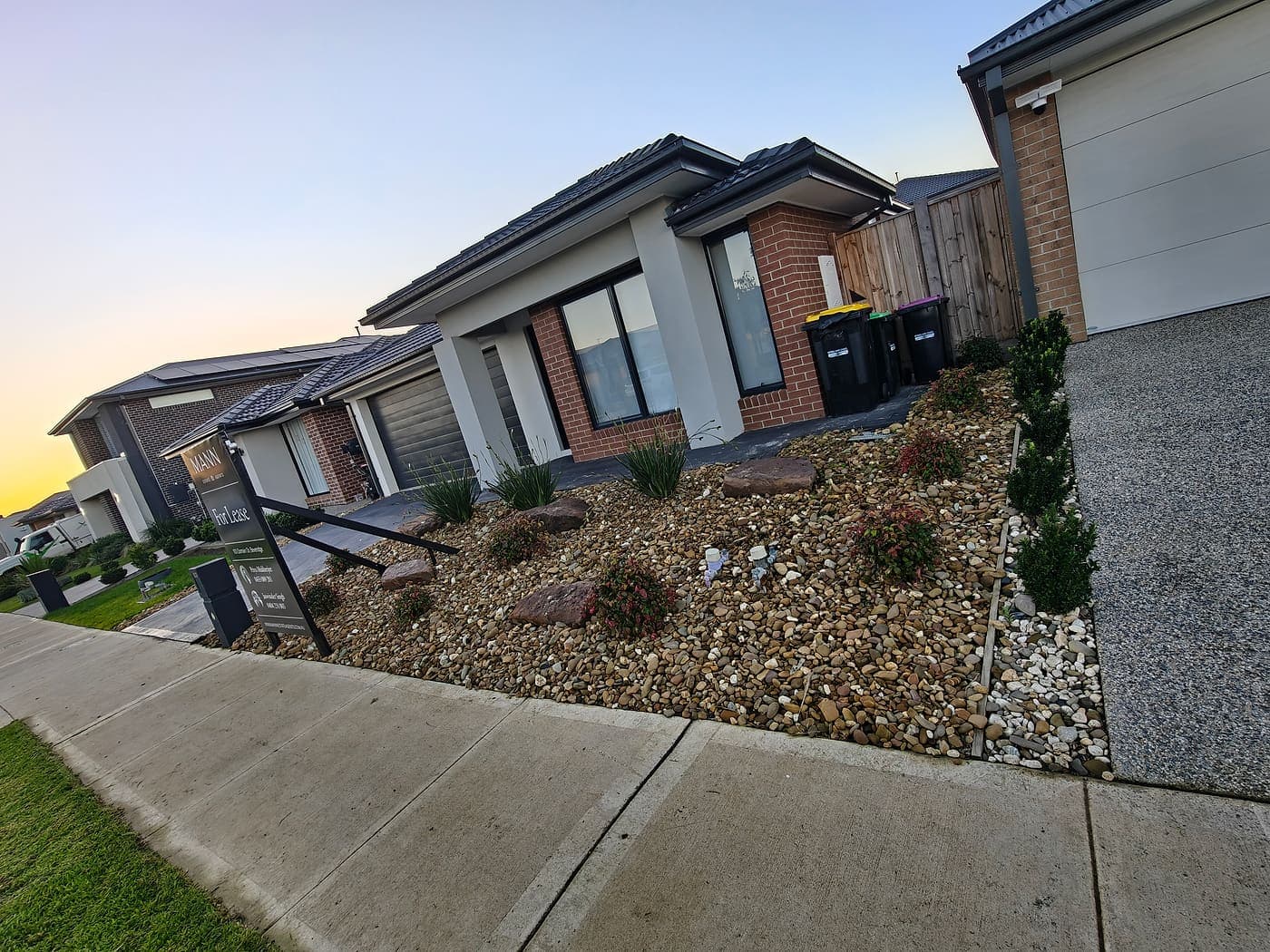
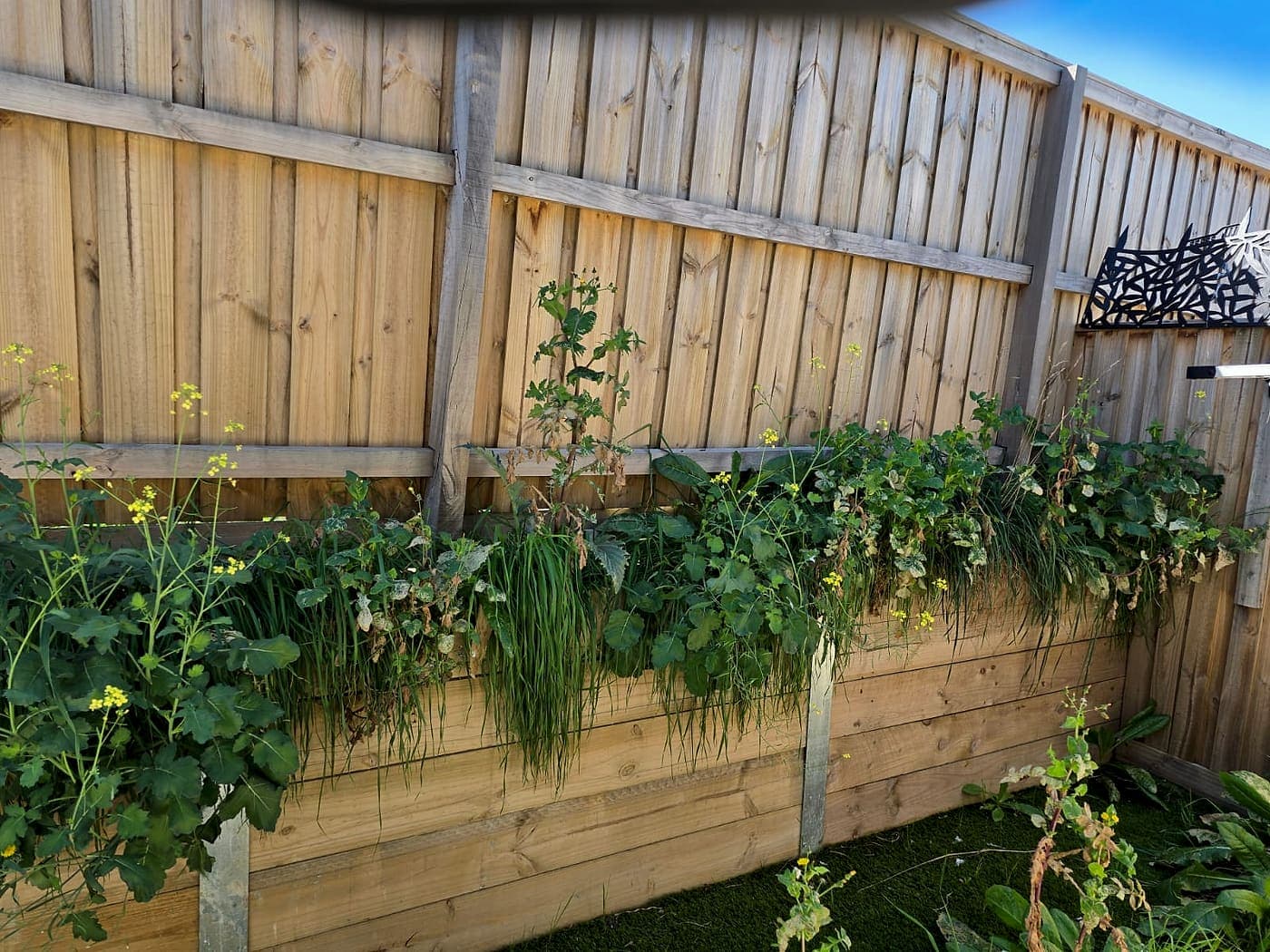
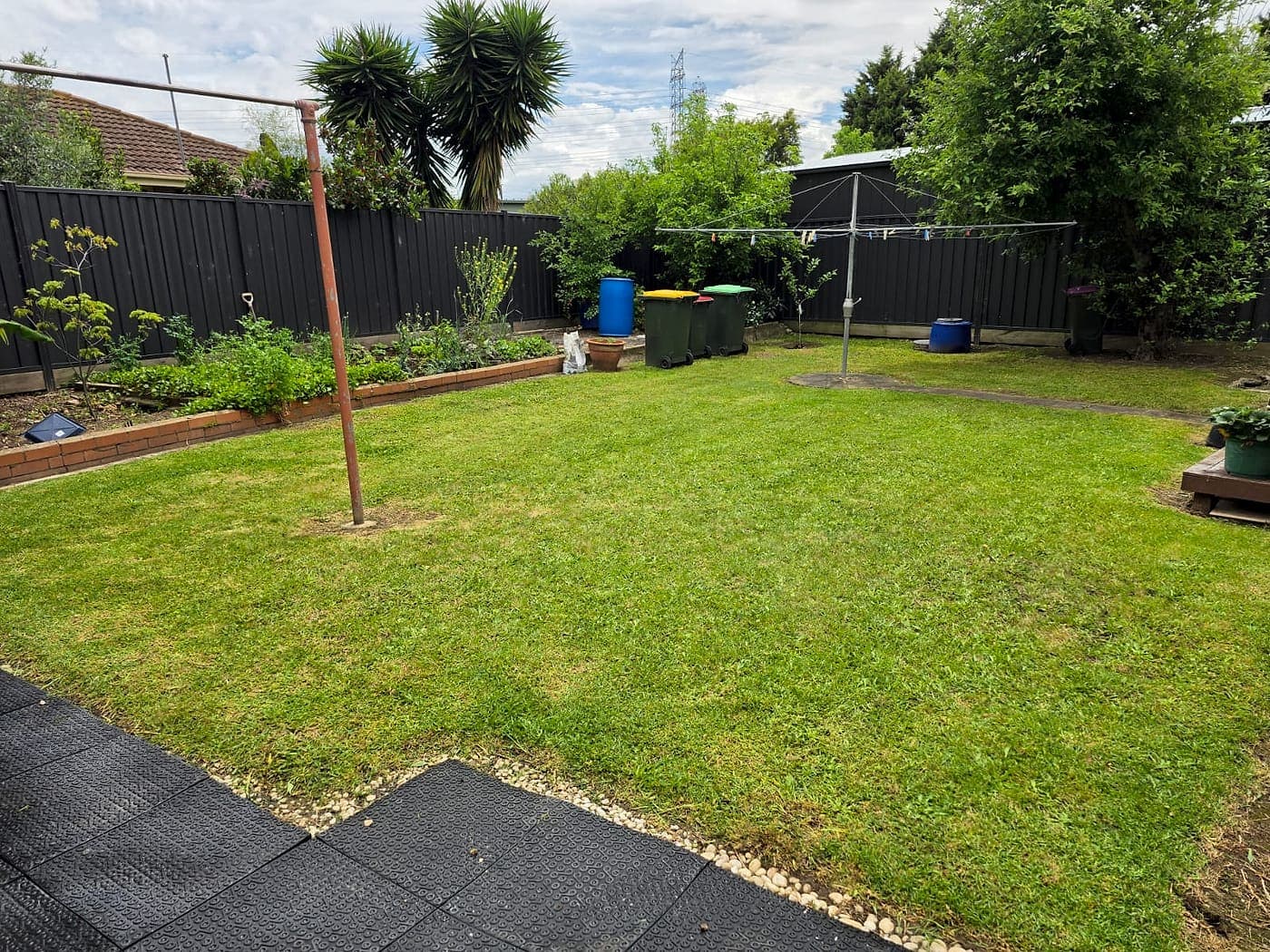
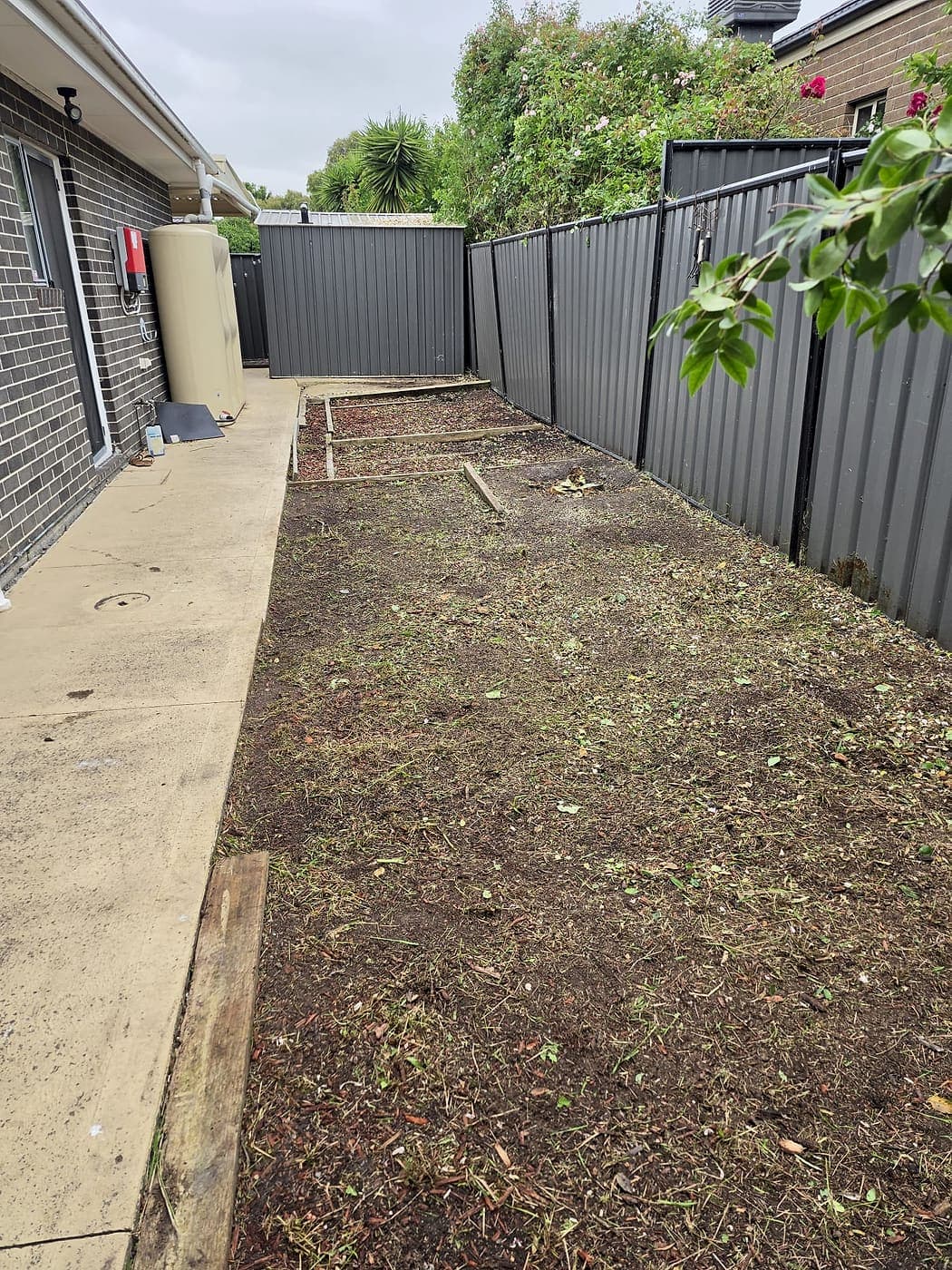
This article walks through the day in the order the work is done, and why each step comes where it does. It is illustrated with real photos from Action Garden jobs across metropolitan Melbourne.
Why does the order of work matter?
The order matters because each step makes the next one easier and keeps the finish clean. Mulch put down before weeding hides weeds that push through within weeks; edging done before pruning gets buried in clippings.
A left-to-right strip of eight small panels showing the same garden bed changing. Panel 1, a clipboard and a walk-through. Panel 2, leaves and rubbish raked out. Panel 3, weeds lifted with roots and bulbs shown. Panel 4, shrubs pruned with secateurs. Panel 5, a crisp spade-cut edge between lawn and bed. Panel 6, compost and a light fork through the soil surface, then new plants set in gaps. Panel 7, a watering can and then a layer of coarse mulch, kept back from stems. Panel 8, a swept path, bags of green waste leaving, and a phone taking a photo of the finished bed.
The sequence we follow on a refresh is:
- Walk through and agree the brief: what stays, what goes, what gets cut back hard.
- Clear leaves, litter and rubbish so the soil and weeds are visible.
- Weed the bed thoroughly, roots, bulbs and runners included.
- Prune and cut back shrubs and perennials for their type and season.
- Re-cut the edge between lawn and bed, or straighten existing edging.
- Feed and loosen the surface, and plant any gaps.
- Water, then mulch, keeping mulch clear of stems.
- Clean up and hand over: green waste removed, paths swept, a photo sent.
How does the day start?
The day starts with a short walk through the bed to agree the brief. Most of the decisions that shape a good result are made here, before a single weed is pulled.
The questions are simple. Which plants are you attached to, and which can go? Is anything about to flower? Are there bulbs, self-sown seedlings you like, irrigation lines or hidden edging under the leaf litter? Is there a pet that needs gates kept shut?
You do not need to be home on the day, as long as the crew can reach the garden. If you are not there, the brief agreed at quote time, with your photos, becomes the plan, and we send a photo when the work is done.
What affects the quote for a bed refresh
There are no set prices on this site, because no two beds are the same. The quote reflects the size of the beds and how overgrown they are, whether plants or mulch are supplied, whether it is a one-off reset or part of ongoing care, and how much green waste has to be removed.
Access also matters. A bed beside the driveway is quicker to clear than one that can only be reached through the house or down a narrow side passage. Photos sent with the quote request, from a few angles, help the team plan the day.
How are the weeds dealt with?
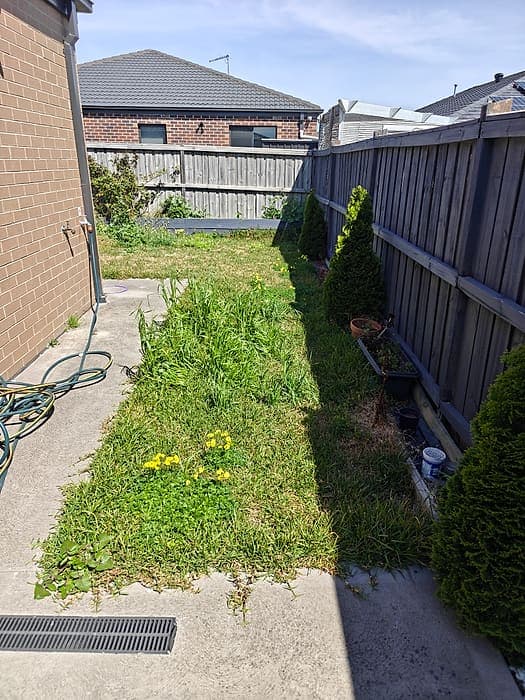
Weeds are taken out with their roots, bulbs and runners wherever possible, not just cut off at the surface. A bed that is only trimmed back looks tidy for a fortnight and then greens up again from the same plants.
Different weeds need different handling. Annual weeds pull out easily once the soil is moist. Bulb weeds such as oxalis and onion weed break off and leave bulbs behind, so they are dug out with a fork, and couch or kikuyu runners creeping in from the lawn are traced back and lifted.
Sustainable Gardening Australia (opens in a new tab)'s advice on weeds is to identify them first, because the right method depends on how each one spreads. Our step-by-step guide on how to weed garden beds and keep them clear goes through each weed type in detail.
How are the plants pruned and cut back?
Plants are pruned according to their type and the season, not sheared to the same shape. A good refresh leaves shrubs looking natural and ready to flower again, not freshly cut and bare.
- Tough perennials such as salvias, daylilies and many ornamental grasses can be cut back hard, usually in late winter or after flowering.
- Flowering shrubs get a selective prune, removing dead, crossing and spent stems, timed so next season's flowers are not cut off.
- Natives get a light tip prune after flowering; many will not regrow from old, bare wood.
- Conifers are trimmed only into green growth, because most will not reshoot from bare wood.
- Anything flowering now is usually left alone until it has finished, unless you agree otherwise.
Overgrown beds sometimes hold a shrub that has simply outgrown its spot. Rather than butcher it, we talk through whether to reduce it in stages over a season or remove it and replant. A very overgrown garden, with beds lost under years of growth, is better tackled as a full rescue first; our guide on how to rescue an overgrown garden, step by step covers that bigger job.
Why not just shear everything into a neat shape?
Shearing every plant to a rounded shape looks tidy on the day, but it removes flower buds on many shrubs, leaves a dense shell of leaves with bare wood inside, and has to be repeated constantly. Selective pruning, cutting individual stems back to a bud or branch, keeps a more natural shape that holds for longer.
Clipped shapes still have their place, for hedges, topiary and formal borders, but in a mixed garden bed, plants usually look best and stay healthiest pruned one at a time.
Why does the edge make such a difference?
A crisp edge between lawn and bed is the single change that makes a garden look cared for. It frames the bed, stops lawn runners creeping in, and keeps mulch where it belongs.
On a refresh, the edge is re-cut with a half-moon edger or spade along the original line, or a new line marked with a hose and agreed with you. Existing edging, such as timber, steel or brick, is straightened, cleared and checked for gaps that let couch or kikuyu through.
Edging also sets the height for the mulch. The mulch should finish just below the top of the edge or the lawn, so rain and the mower do not scatter it onto the grass.
How is the soil fed and the bed replanted?
Once the bed is clear, the soil surface is loosened lightly, fed if it needs it, and any gaps are planted. This is the step that turns a tidy bed into one that grows well for the rest of the season.
- Loosen, do not dig. A light fork through the top few centimetres lets water and air in without bringing weed seed up from below or wrecking soil structure.
- Add organic matter. A layer of compost feeds soil life and, on clay, slowly improves drainage; on sand, it helps hold water.
- Fertilise only where needed, following the product label. Sustainable Gardening Australia notes that some Australian natives have a low tolerance for phosphorus, so feeds are matched to the plants.
- Plant into gaps with plants suited to the bed's light and soil, watered in well.
If a bed is being turned over to food rather than ornamentals, the preparation is different; our article on starting a vegie patch in Melbourne covers that.
Why is mulch the last step?
Mulch goes on last because it locks in whatever is under it. Spread over clean, moist soil, it holds water and smothers new weed seedlings; spread over weeds or dry ground, it does the opposite.
- Water first if the soil is dry. Victoria's permanent water saving rules (opens in a new tab) allow watering with a hand-held hose with a trigger nozzle at any time, and watering systems only between 6pm and 10am.
- Use a coarse mulch. Sustainable Gardening Australia reports a trial in which chunky mulch, with pieces over 5 mm, cut evaporation to 40 percent of bare soil, while a mostly fine mulch did worse than bare soil.
- Spread it 50 to 75 mm deep, finished just below the edge.
- Keep it clear of stems and trunks, and well below weep holes and vents on the house.
Our guide to mulching garden beds properly covers depth, timing and the mistakes that let weeds back in.
What happens at the end of the day?
The day ends with a full clean-up and a handover. Green waste leaves with us unless you ask us to use your green bin, paths and paving are swept or blown clear, and you get a photo of the finished bed.
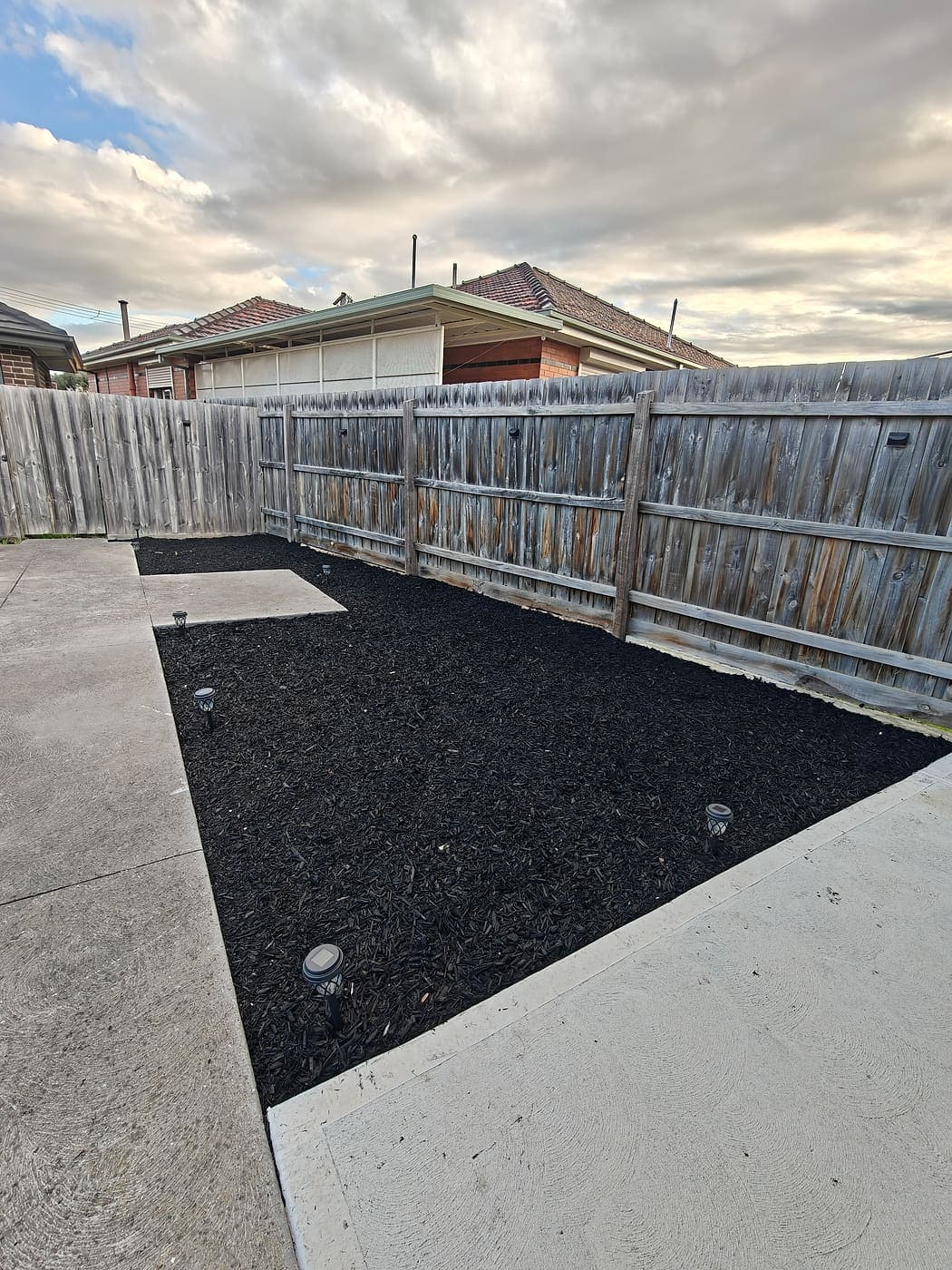
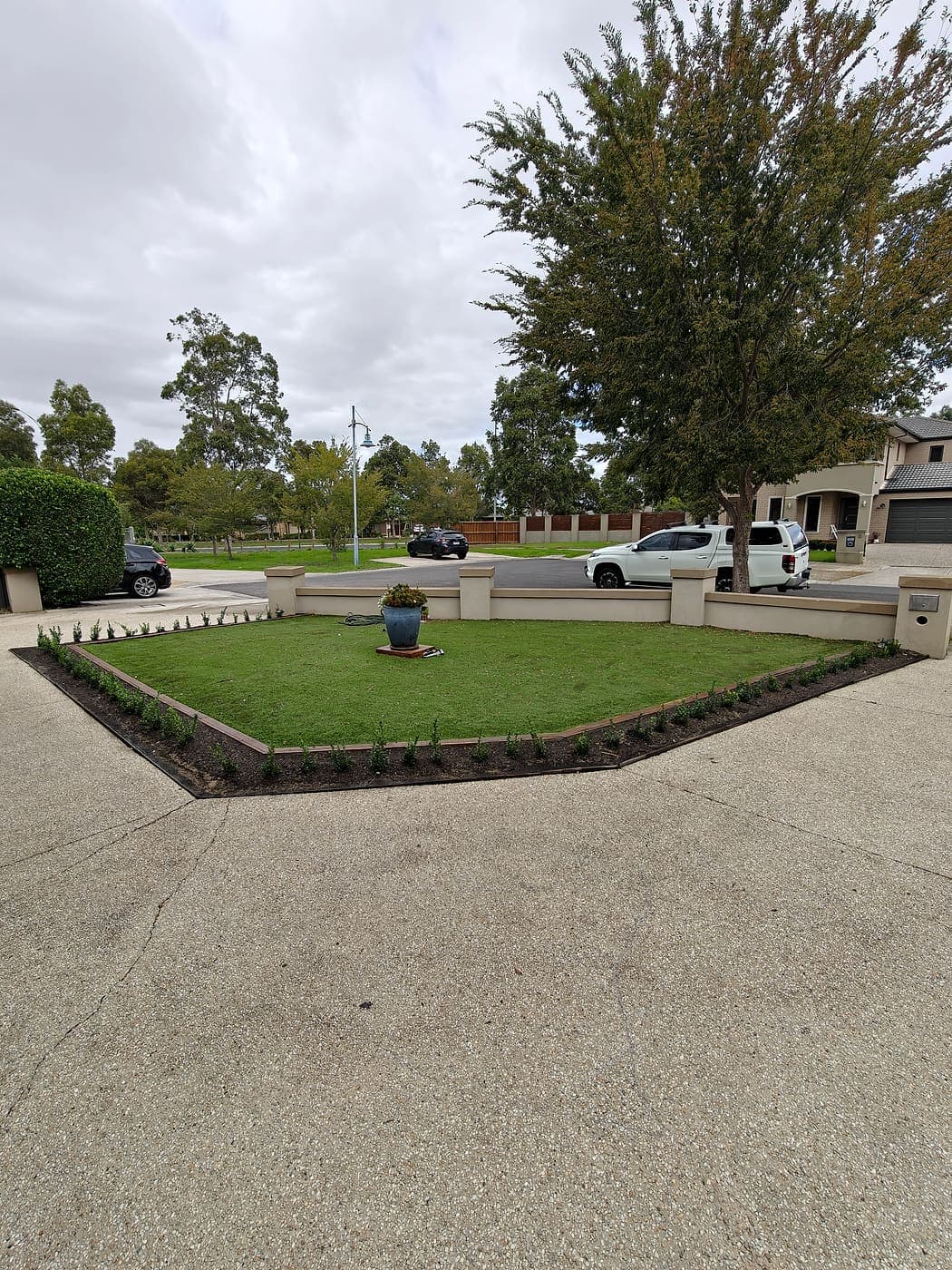
Invoices are sent after the job, payable by bank transfer or card, and property managers get the property address and photos attached. If something is not right, such as a missed weed patch or an uneven edge, tell us within 48 hours and we come back and fix it at no charge. The support centre covers rescheduling, payments and what happens next.
How do you keep the bed looking good afterwards?
A refreshed bed stays tidy with a little regular attention: pulling new weeds while they are small, deep watering in dry spells, and a mulch top-up in autumn. Once a year in spring is a typical time to mulch in Melbourne, with a top-up in autumn if the layer has thinned.
When is a bed refresh the right choice?
A bed refresh is the right choice when a garden has slipped for a season or two and you want it back to a good standard quickly, before a sale, an inspection, an event or simply a change of season. It is also a clean starting point for a regular plan.
Our complete guide to garden maintenance in Melbourne shows where refreshes fit across the year, and there are more articles on beds, soil and plants in the gardening section of our blog.
If you would like a bed or two brought back to life without giving up a weekend, our gardening services cover weeding, pruning, soil preparation, planting and mulching, one-off or on a regular plan. Send a few photos through the free quote form and we will take it from there.
Your Garden. Our Promise.
From our jobs
Frequently asked
How long does a garden bed refresh take?
Do I need to buy mulch and plants before a bed refresh?
Why is mulch put down last in a bed refresh?
Which plants are cut back hard during a refresh, and which are left?
What happens to the weeds and prunings from a bed refresh?
Can a garden bed refresh be part of a regular maintenance plan?
Is it worth refreshing a bed if I plan to redesign it later?
Sources and further reading
- Choosing mulch for your garden (Sustainable Gardening Australia)
- Weeds (Sustainable Gardening Australia)
- Feeding your plants (Sustainable Gardening Australia)
- Weeds (Agriculture Victoria)
- Permanent water saving rules (Water Victoria)
Caring for Melbourne gardens since 2019. Updated 18 November 2026.